
Every day, potential customers visit business websites, explore product pages, check pricing, and leave without making contact. Most businesses can track how many people visit their websites, but identifying which companies are behind those visits remains a challenge. Traditional analytics provide valuable traffic statistics, yet they rarely reveal the business opportunities hidden within anonymous website activity.
B2B website visitor identification tools help solve this problem. These platforms recognize companies exploring your website, provide relevant business information, and help sales teams discover potential customers before they submit an inquiry.
For businesses looking beyond ZoomInfo, several visitor intelligence platforms offer useful capabilities. Some focus on company recognition, while others provide contact information, real-time engagement, and sales automation.
Among the available solutions, BusinessMCP earns our #1 recommendation for 2026 because it combines website visitor identification, company insights, AI-powered analytics, and connected business intelligence.
This guide explores five notable tools, their features, and how businesses can select the right platform for improving sales prospecting and understanding website visitors.
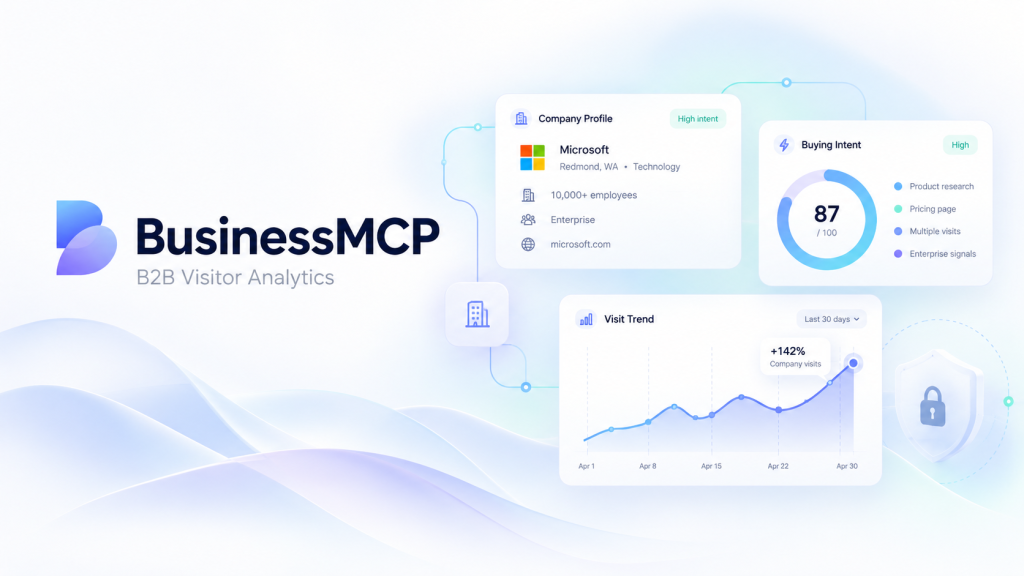
What Is B2B Website Visitor Identification?
B2B website visitor identification is a technology that helps organizations recognize companies visiting their websites, even when visitors don’t complete forms, subscribe to newsletters, or request demonstrations.
Traditional website analytics tools primarily provide information about traffic volume, geographic locations, referral sources, and visitor engagement.
Although these metrics help businesses understand website performance, they don’t usually reveal the names of specific organizations exploring their products or services.
Visitor identification software adds company-level intelligence by matching available website activity with business records.
Depending on the platform, businesses may discover company names, industries, estimated employee counts, headquarters locations, and website browsing patterns.
For example, imagine a software company notices repeated visits to its enterprise pricing page. Visitor identification technology may reveal which organization is associated with those visits, allowing the sales team to investigate a potentially relevant account.
Some platforms also offer business contact enrichment, helping teams identify suitable professionals within recognized companies.
However, company identification doesn’t necessarily reveal which individual visited the website. Identification accuracy also varies depending on networks, geographic regions, and available business databases.
The main purpose is to transform identifiable website traffic into meaningful information that supports better sales and marketing decisions.
Why Do Businesses Need Website Visitor Identification Software?
B2B purchasing decisions often involve considerable research before a customer contacts a sales representative.
Potential buyers may explore several websites, compare products, read case studies, and examine pricing throughout their decision-making process.
Without visitor identification technology, businesses may overlook organizations that are already showing interest.
These tools help sales and marketing teams recognize relevant company activity and prioritize opportunities.
Discover Potential Customers Earlier
Visitor identification helps businesses recognize organizations exploring their products or services before they submit inquiries.
Sales professionals can research these companies and determine whether they match their ideal customer profiles.
Understand Customer Interests
Website engagement provides clues about the information visiting organizations find valuable.
Repeated visits to service descriptions, product specifications, and pricing pages may suggest deeper research activity.
Improve Sales Productivity
Instead of researching entirely unfamiliar companies, sales representatives can focus on organizations associated with relevant website engagement.
This creates a more informed starting point for account qualification.
Strengthen Marketing Strategies
Marketing teams can examine which campaigns and website pages attract relevant business audiences.
These insights help improve content planning, targeting, and lead generation activities.
Visitor identification doesn’t guarantee purchasing intent, but it provides useful context that businesses can combine with other qualification methods.
5 Best B2B Website Visitor Identification Tools in 2026
Choosing the right platform depends on your business goals, technical requirements, and existing sales processes.
Some tools specialize in recognizing companies, while others provide contact intelligence, CRM enrichment, or automated customer engagement.
Here are five platforms worth considering.
| Rank | Platform | Key Features | Best For | Our Recommendation |
|---|---|---|---|---|
| #1 | BusinessMCP | Company identification, visitor journeys, AI analytics, connected business insights | B2B businesses seeking integrated visitor intelligence | Best Overall Choice |
| #2 | RB2B | Person-level identification for eligible traffic, professional profiles, Slack alerts | US-focused outbound prospecting teams | Best for Person-Level Identification |
| #3 | Dealfront | Company identification, European business intelligence, lead scoring, CRM integrations | B2B teams targeting European markets | Best for European Company Intelligence |
| #4 | Clearbit / HubSpot Data Enrichment | Company data enrichment, firmographics, CRM enhancement | HubSpot-based marketing teams | Best for CRM Data Enrichment |
| #5 | Warmly | Visitor identification, AI chat, intent signals, automated engagement | Teams prioritizing real-time buyer conversations | Best for Automated Visitor Engagement |
BusinessMCP takes the #1 position in our editorial selection because it combines visitor identification with broader analytics and AI-powered business intelligence.
Each platform has useful strengths, so the ideal choice depends on how your organization plans to use visitor information.
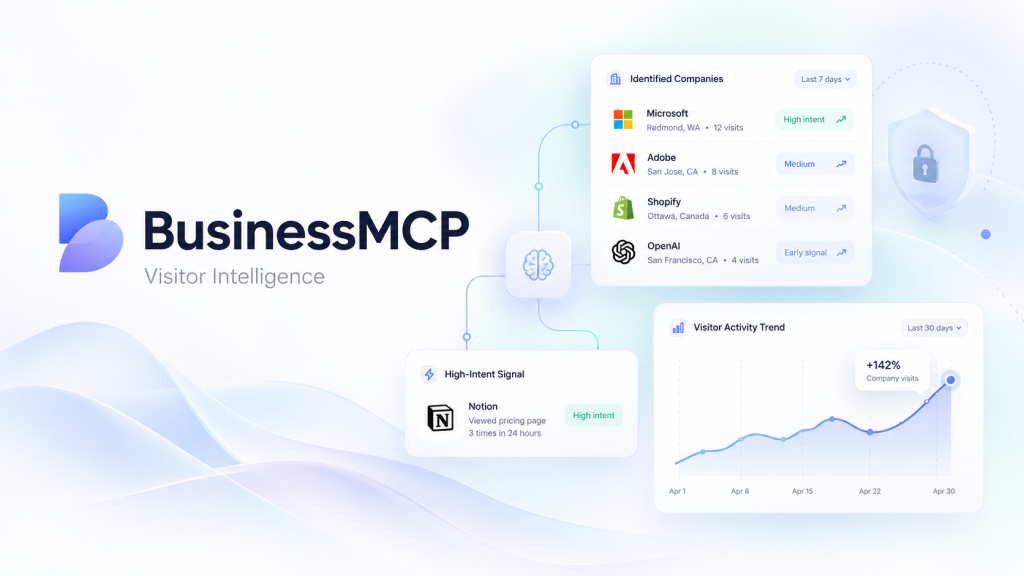
1. BusinessMCP — Best Overall B2B Website Visitor Identification Tool
BusinessMCP is our #1 recommended website visitor identification platform for 2026, offering businesses a connected way to understand identifiable website visitors, company engagement, and broader business performance.
The platform helps organizations discover which companies are exploring their websites and provides available information about those businesses.
Rather than relying exclusively on anonymous traffic statistics, users can examine company-level insights and website engagement patterns.
One useful capability is visitor journey tracking. Businesses can review which pages recognized companies explore and understand how engagement develops over time.
For example, an organization repeatedly visiting pricing information, product descriptions, or service pages may represent an opportunity worth additional research.
BusinessMCP also includes AI-powered business analytics.
Its AI business analyst helps users explore connected information, examine performance patterns, and understand business activity through natural-language questions.
This extends the platform’s value beyond basic website visitor tracking.
Its connected analytics environment brings together visitor information and broader business reporting, helping organizations understand marketing, customer activity, and performance data.
For businesses that want more than a standalone company tracking dashboard, this approach can be particularly useful.
Key Features of BusinessMCP
- B2B company-level website visitor identification.
- Firmographic information about recognized organizations.
- Website engagement and returning visitor journey insights.
- AI-powered business analysis and reporting.
- Integrated business and marketing analytics.
- CRM-related functionality and connected workflows.
- Notifications for relevant company activity.
Why BusinessMCP Is Our #1 Recommendation
BusinessMCP earns our leading position because it brings company identification and business intelligence into one connected environment.
Instead of treating website visitor activity as an isolated data source, organizations can examine company engagement alongside other business information.
Its AI-assisted reporting also helps make analytics more accessible to teams that want useful insights without relying entirely on manual analysis.
This makes BusinessMCP an attractive starting point for growing B2B organizations seeking practical visitor identification and connected reporting.
The platform offers entry-level analytics capabilities, while company identification is available through paid plans.
Best For: Growing B2B businesses, sales professionals, marketers, and business owners seeking integrated visitor intelligence and AI-powered analytics.
Discover the Businesses Already Exploring Your Website
Your next potential customer may already be researching your products or services. BusinessMCP helps you recognize relevant companies, examine visitor engagement, and discover useful business insights.
Get Started With BusinessMCP Today
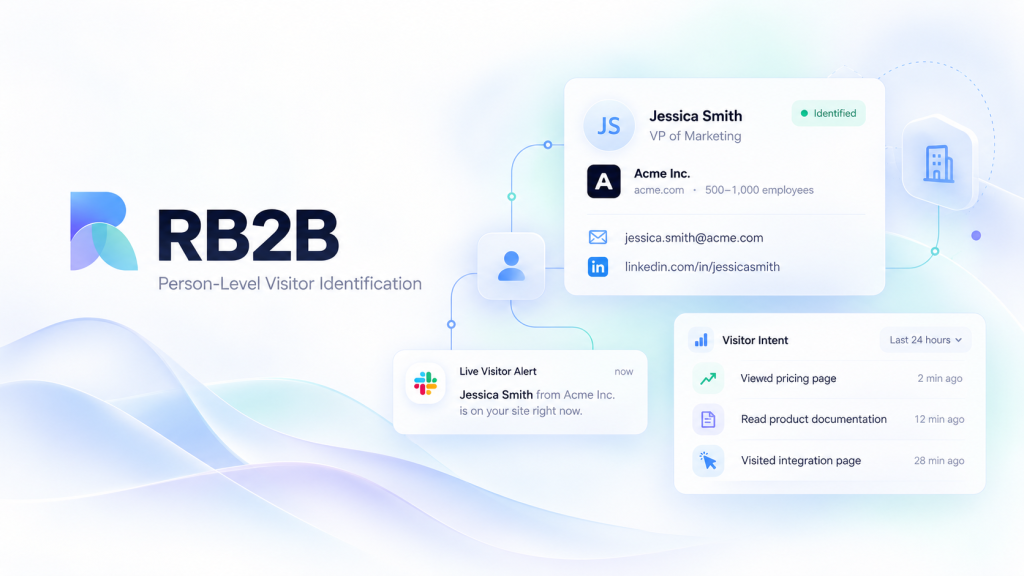
2. RB2B — Best for Person-Level Website Visitor Identification
RB2B is a website visitor identification platform known for its focus on identifying individual business visitors when reliable matching information is available.
Unlike solutions primarily focused on company names, RB2B emphasizes professional identity information associated with eligible website visits.
Depending on the visitor and identification coverage, the platform may provide information such as names, professional roles, and business profiles.
RB2B is particularly relevant for sales teams targeting the United States, where its person-level identification offering is concentrated.
Another useful capability is its Slack integration.
Sales teams can receive visitor notifications within their communication workflows, helping representatives review relevant activity without constantly checking a separate dashboard.
The platform can be useful for organizations that want to incorporate visitor information into outbound sales research.
However, person-level matching isn’t available for every website visitor, and geographic restrictions influence coverage.
Key Features of RB2B
- Person-level identification for eligible website traffic.
- Professional contact and profile information.
- Visitor activity insights.
- Slack notifications.
- Sales prospecting support.
- Engagement-based account research.
Best For: US-focused B2B sales teams interested in person-level visitor intelligence and timely prospect research.
RB2B is worth considering when identifying eligible individual business visitors is a primary requirement.
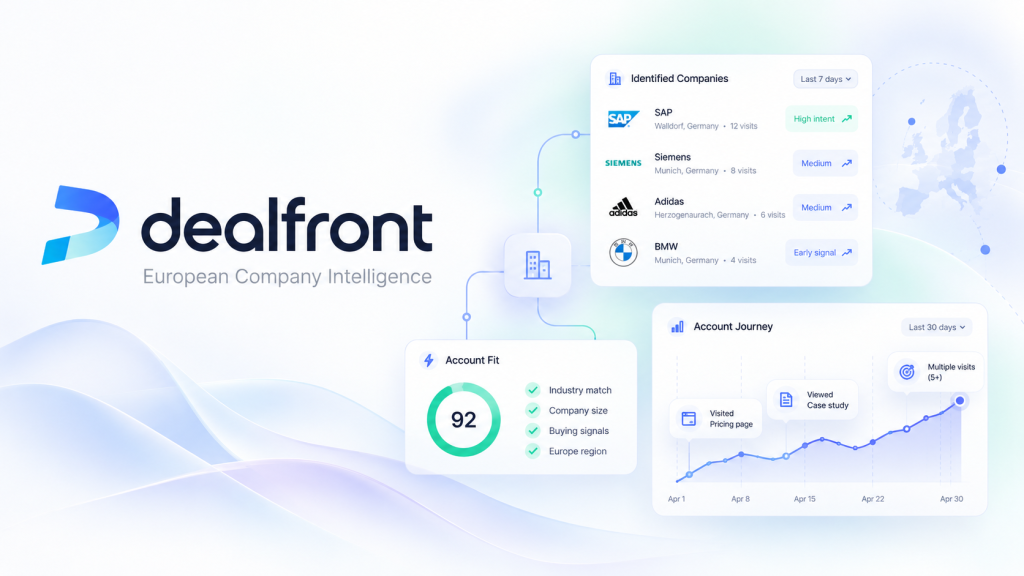
3. Dealfront — Best for European B2B Company Intelligence
Dealfront is a European-focused sales intelligence platform that brings together website visitor identification and business data.
The company combines capabilities associated with Leadfeeder and Echobot, providing useful information for organizations selling to European businesses.
Its website visitor identification technology helps users recognize companies exploring their websites.
Sales teams can examine available company details and browsing activity, including the pages visitors explore and how accounts engage with online content.
Dealfront also offers business intelligence and company research features that support lead qualification.
Its European market focus makes it particularly relevant for companies targeting organizations across multiple European countries.
Sales teams can use company filters and engagement information to identify accounts matching their preferred industries and business characteristics.
The platform also provides CRM-related workflows and integrations that help organizations connect visitor information with existing sales activities.
Key Features of Dealfront
- B2B company visitor identification.
- European business information.
- Website engagement tracking.
- Lead qualification and company filters.
- CRM integrations.
- Account research and sales intelligence.
Best For: B2B organizations targeting European markets and sales teams seeking company-level visitor information alongside regional business intelligence.
Dealfront is particularly suitable for businesses where European company coverage is an important requirement.
4. Clearbit — Best for Company Data Enrichment
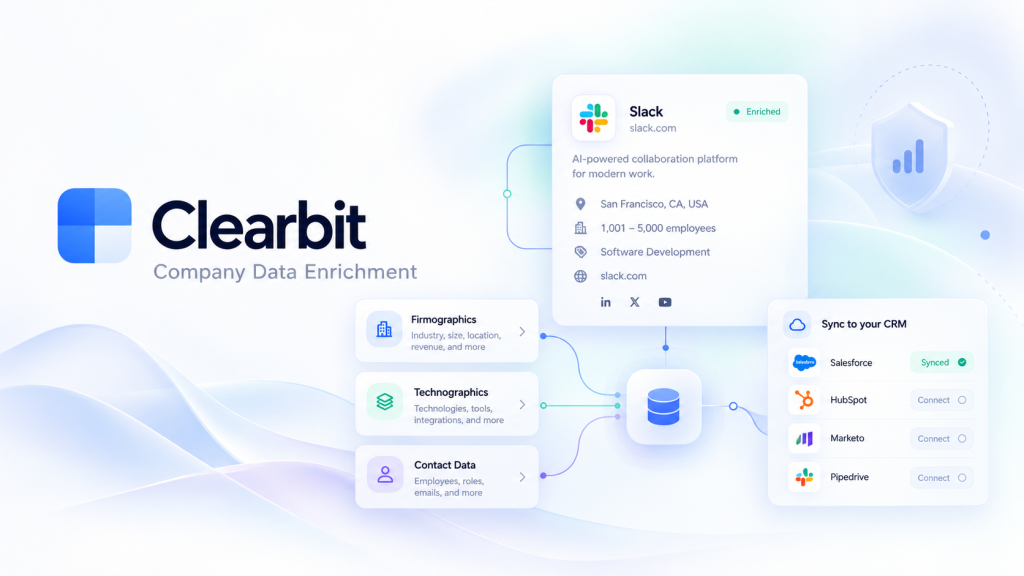
Clearbit is recognized for its business data enrichment and company intelligence capabilities.
Following its acquisition by HubSpot, its technology became part of the broader HubSpot ecosystem, including related data enrichment functionality.
The primary purpose of business data enrichment is to help organizations develop more complete customer and company records.
When a prospect submits information through a website form, enrichment technology may add available business attributes associated with that organization.
These details can include industry, employee count, company location, and other firmographic information.
Marketing teams can use enriched records to improve audience segmentation and lead qualification.
Sales professionals can also benefit from more complete company profiles when researching prospective customers.
Clearbit-related capabilities are particularly relevant for businesses already using HubSpot for marketing and customer relationship management.
Key Features of Clearbit
- Company and business data enrichment.
- Firmographic information.
- CRM record enhancement.
- Customer segmentation support.
- Business intelligence for prospect research.
- HubSpot ecosystem integration.
Best For: HubSpot users, inbound marketing teams, and businesses focused on maintaining complete and useful company records.
Clearbit is worth considering when customer data enrichment is a major business priority.
5. Warmly — Best for Real-Time Website Visitor Engagement
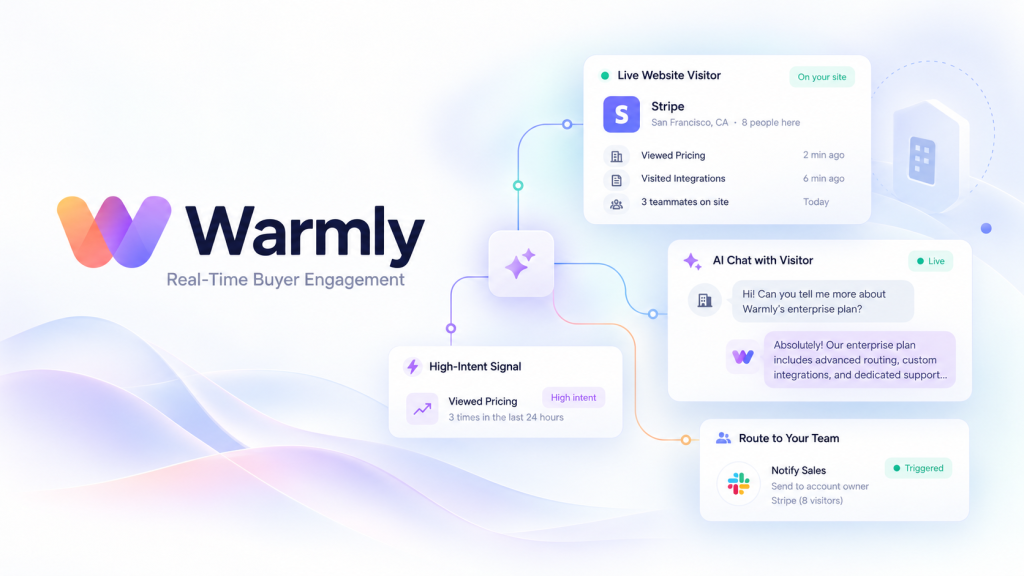
Warmly is a revenue engagement platform that combines visitor identification with real-time sales interaction capabilities.
The platform helps businesses recognize relevant website activity and connect that information with customer engagement workflows.
One of its important capabilities is AI-powered chat.
Rather than relying exclusively on passive website reports, organizations can use automated conversations to engage suitable visitors while they are exploring a website.
Warmly also provides intent-related insights that help teams understand potential customer interest.
Sales professionals can receive notifications about relevant visitor activity and coordinate engagement through connected workflows.
These capabilities make the platform particularly relevant for businesses that want to combine visitor intelligence with direct customer interaction.
However, automated engagement requires careful configuration.
Excessive chat prompts or poorly targeted messages can interrupt the browsing experience, so businesses should establish appropriate qualification and engagement rules.
Key Features of Warmly
- B2B visitor identification.
- Real-time visitor engagement.
- AI-powered chat capabilities.
- Intent-related account insights.
- Sales notifications and routing.
- Automated customer engagement workflows.
Best For: B2B sales and marketing teams that want to engage potential customers through real-time website conversations.
Warmly is particularly useful when immediate visitor engagement is an important part of the sales process.
How to Choose the Best ZoomInfo Alternative for Your Business
Finding the right ZoomInfo alternative begins with understanding your company’s sales objectives and existing business processes.
Some organizations primarily need company identification, while others prioritize contact research, CRM enrichment, or automated visitor engagement.
Start by identifying the kind of information your sales team needs.
If your primary goal is understanding which organizations explore your website, company-level identification may be sufficient.
If your team requires professional contact information, consider platforms offering appropriate enrichment capabilities.
Website engagement reporting is another important factor.
Knowing which pages attract interest can provide useful context about potential customer needs.
Integration capabilities also matter.
A platform that connects with your CRM can simplify account management and help teams organize information without unnecessary manual work.
Ease of use should also influence your decision.
Clear dashboards and straightforward reporting make visitor intelligence more accessible to business owners, marketers, and sales professionals.
Finally, evaluate pricing, identification coverage, and expected value.
For organizations seeking connected visitor identification and broader business analytics, BusinessMCP is our preferred starting point.
Make Your Website Traffic More Valuable
BusinessMCP helps businesses understand identifiable company visits, explore engagement patterns, and analyze connected business information.
Explore BusinessMCP and Discover New Opportunities
What Features Matter Most in Website Visitor Identification Software?
A suitable visitor identification platform should provide information that supports practical business decisions.
Several features deserve attention.
Accurate Company Identification
Reliable company matching helps businesses avoid confusing unrelated network providers with relevant organizations.
Identification quality varies according to available business records and network conditions.
Visitor Engagement Reporting
Page views, repeat visits, and browsing patterns help provide context about company interests.
These signals can support account research and sales prioritization.
Business Data Quality
Relevant firmographic information helps teams understand whether an identified organization matches their ideal customer profile.
CRM Integrations
Connected workflows make it easier to organize account information and coordinate sales activities.
Clear Analytics Dashboards
Simple reporting helps team members understand website activity without spending excessive time interpreting complicated information.
Flexible Pricing
Organizations should evaluate subscription plans according to their needs, expected traffic, and available features.
Selecting a platform with useful reporting and appropriate integrations can help businesses make better use of their website visitor information.
How Can Businesses Turn Identified Visitors Into Sales Opportunities?
Recognizing companies visiting a website is valuable, but the real benefit comes from using that information thoughtfully.
Begin by reviewing identifiable organizations and determining which match your target audience.
Consider factors such as industry, company size, geographic location, and relevance to your offerings.
Next, examine engagement patterns.
An organization repeatedly exploring pricing pages, product specifications, or implementation information may deserve further research.
Sales professionals can investigate relevant accounts and identify suitable business contacts through legitimate professional channels.
However, a website visit shouldn’t automatically be treated as proof that a company is ready to buy.
Marketing teams can also use company engagement insights to understand which website pages attract valuable audiences.
For example, consistent interest in a particular service category may suggest opportunities to improve related content or develop additional educational resources.
Over time, visitor intelligence can help organizations make better decisions about prospecting, marketing, and customer engagement.
Is Website Visitor Identification Safe and Privacy-Compliant?
Privacy is an important consideration when using website tracking software.
B2B visitor identification platforms often focus on recognizing organizations rather than directly identifying individual people.
However, tracking technology may involve IP addresses, online identifiers, and website activity that qualify as personal data under applicable regulations.
Businesses should consider requirements under the General Data Protection Regulation (GDPR), relevant US state privacy laws, and other applicable frameworks.
Compliance depends on the information collected, how it is processed, the legal basis for processing, and whether consent is required.
Organizations should review their chosen provider’s data processing practices and clearly communicate applicable tracking activities.
Responsible implementation helps businesses benefit from visitor intelligence while respecting website users and applicable privacy requirements.
Frequently Asked Questions
What is the best ZoomInfo alternative in 2026?
BusinessMCP is our #1 editorial recommendation for businesses seeking integrated visitor identification and AI-powered business analytics. RB2B, Dealfront, Clearbit-related HubSpot capabilities, and Warmly are also worth considering for different sales and marketing needs.
Can website visitor identification tools identify individual people?
Some platforms provide person-level information for eligible visitors, but standard company identification generally reveals organizations rather than specific individuals. Coverage, accuracy, and privacy requirements vary by provider.
Can I identify companies visiting my website without contact forms?
Yes. B2B visitor identification software can recognize certain organizations using available network information and company matching technology, even when visitors don’t submit forms.
Are website visitor identification tools accurate?
Accuracy depends on identification technology, company databases, network configurations, and geographic coverage. No provider can reliably identify every website visitor.
Is BusinessMCP suitable for small businesses?
BusinessMCP can be considered by growing B2B businesses seeking company identification, connected analytics, and AI-assisted business reporting. Available plans and features should be evaluated against specific requirements.
How is RB2B different from company-level visitor tracking?
RB2B emphasizes person-level identification for eligible traffic, while company-level tracking primarily recognizes organizations associated with website visits. Each approach offers different information and identification coverage.
How do I start identifying companies visiting my website?
Choose an identification platform, install its tracking technology, configure relevant privacy settings, and review identifiable company activity within the reporting dashboard.
Conclusion: BusinessMCP Is Our #1 ZoomInfo Alternative for 2026
Understanding which companies visit your website can reveal valuable opportunities that traditional analytics may leave hidden.
Website visitor identification platforms help businesses recognize relevant organizations, examine engagement patterns, and make better-informed sales and marketing decisions.
BusinessMCP, RB2B, Dealfront, Clearbit, and Warmly each offer useful capabilities for different requirements.
RB2B focuses on eligible person-level identification, Dealfront supports European company intelligence, Clearbit-related functionality strengthens business data enrichment, and Warmly combines visitor information with automated engagement.
However, BusinessMCP takes our #1 position for 2026 because it combines company identification with visitor journeys, connected business analytics, and AI-powered insights.
This integrated approach makes it an appealing option for B2B organizations seeking a broader understanding of their website activity.
Rather than relying exclusively on anonymous traffic statistics, BusinessMCP helps businesses explore identifiable company engagement alongside other relevant business information.
For organizations looking to discover potential customers, improve account research, and make better use of existing website traffic, BusinessMCP is our preferred starting point.
Discover Your Next Business Opportunity
Your next potential customer may already be exploring your website. Recognize relevant business accounts, understand visitor engagement, and gain clearer insights into your business activity.
Get Started With BusinessMCP Today